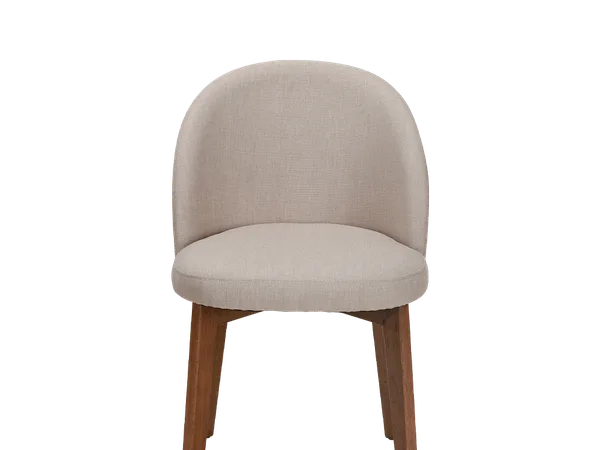
Buyers spend a lot of time choosing the wood and almost none choosing the finish — then judge the finished chair entirely on how the surface feels and ages. The finish is what a person's hand and clothes meet every day, so it deserves the same attention as the frame underneath it. We run three broad routes, and they fail in different ways.
The three routes
Lacquer and polyurethane top-coats build a film on the surface. Sprayed and often UV-cured, they give a hard, sealed shell that resists spills, wipes clean and moves fast through the line — good for high-volume orders and for tables and seats that meet drinks. The downside is repairability: when a film coat finally scratches through, you usually refinish the whole part rather than spot-fixing it, and a thick gloss can look more "coated" than "wood."
Penetrating oils soak into the timber instead of sitting on top. They leave the grain looking and feeling like wood, and the great advantage is repair — a scuffed oiled chair can be sanded locally and re-oiled by the customer, no factory needed. The trade-off is protection: oil resists less against standing water and heavy commercial wiping, and it wants occasional re-coating. It is a beautiful home finish and a maintenance commitment in a restaurant.
Stain is not really a protective finish at all — it is colour. It changes the tone of the wood and then needs a clear coat (lacquer or oil) over it for protection. Species matters here: tight, even-grained woods like beech and rubberwood take stain uniformly, while open-grained oak drinks it uphill in the early grain and can blotch without a conditioner. We sample stain on the actual production species, never on a swatch of something else.
The trade-off, stated plainly
If your chair lives in homes and the brand is about natural wood, a penetrating oil or a thin matte PU is the right call — it looks honest and the customer can maintain it. If the chair lives in a café or a canteen, we steer you to a harder UV-cured top-coat, because a finish the staff can wipe down a hundred times beats a finish that looks lovely for six months. Specifying a delicate oil finish for contract use is the kind of decision that comes back as a complaint, so we say no to it early rather than ship it and argue later.
One regulatory note worth raising: water-based coatings have largely displaced high-solvent ones for indoor furniture on VOC grounds, and many markets now expect low-emission finishes. We default to water-based systems and can document the coating used per order.
Sheen, samples and the trap of the studio photo
Two practical things derail finish decisions. The first is sheen. A high-gloss chair photographs beautifully and shows every fingerprint and micro-scratch in real daylight; a matte or satin finish hides wear and reads more like natural wood. For dining and contract use we usually steer buyers toward satin — it ages more gracefully than gloss under real use, even though gloss wins the showroom shot. That is a genuine trade-off, and we'd rather name it than let a buyer pick gloss off a render and regret it in the field.
The second is approving colour from a screen or a small chip. Wood is not a flat paint surface — the same stain reads differently across species and even between boards, because grain and density vary. We approve finish on a full production-species sample under neutral light, and we hold a retained reference so reorders match. Signing off colour from a phone photo is how a buyer ends up with a second container that "looks different" from the first when nothing actually changed but the lighting.
How we handle it
Send us the look you want and the setting the chair will live in, and we will match a finish system to both — and tell you if the look you've picked won't survive the setting you've described. We finish our dining chairs, bar stools and solid-wood pieces to BIFMA and EN surface-test methods, and finish adhesion or wear testing can be arranged per order. Start a finish sample through our export desk, or see how the ODM workflow locks the finish at the golden-sample stage.