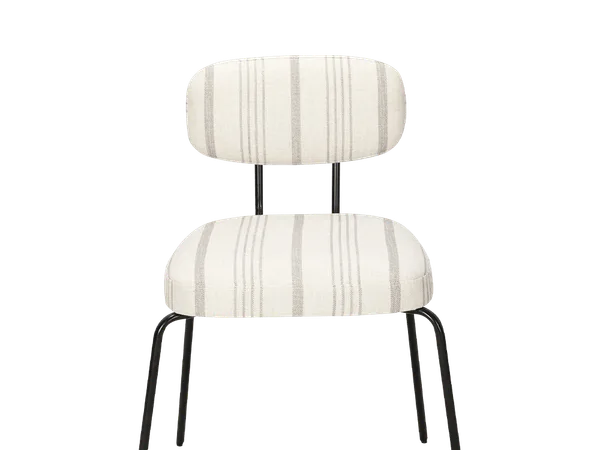
Rubberwood is one of the most misunderstood timbers we work with. To some buyers it is "the cheap stuff," to others it is the green choice on the spec sheet. The truth is more practical than either label, and worth understanding before you accept or reject a quote built around it.
What it actually is
Rubberwood comes from the Pará rubber tree, Hevea brasiliensis — the same tree that produces natural latex. Plantation trees are tapped for latex for roughly 25 to 30 years, and when the yield drops off, the old practice was to burn them. Instead, the timber is now harvested for furniture. That is the root of the "eco-friendly" claim, and it is a fair one: the wood is a by-product of a crop that was grown anyway, not a tree felled from natural forest for its lumber. It is a genuine sustainability angle, distinct from a formal FSC chain-of-custody claim.
As a material it is a medium-density hardwood, pale and straight-grained, sitting around 950–1,000 lbf on the Janka scale — softer than oak or beech, which both sit near 1,290–1,300. It machines cleanly, glues predictably and takes stain very evenly, which is exactly why it shows up in so much value-priced dining and occasional furniture. Once properly dried it is dimensionally stable, with low movement in service — one of the more forgiving woods to keep flat through a sea container and a change of climate.
It is worth being precise about what "softer" means in practice, because the Janka gap sounds bigger than it feels. For a chair frame — legs, rails, a seat people sit on rather than chop vegetables on — rubberwood is plenty strong; the hardness gap with oak shows up mainly as surface dent resistance on edges and tops, not as a frame that fails. So the species choice is less about raw strength and more about how rough a life the surfaces will lead, which is why we tie it to the use case rather than to the Janka number alone.
The two steps that make or break it
Rubberwood has a real weakness: in its raw state it is prone to fungal and insect attack. The whole reason it became a mainstream furniture wood is the treatment process. Soon after sawing, the timber is pressure-treated with a boron-based preservative, then kiln-dried to bring the moisture content down. Skip or rush either step and you don't get a cheaper chair — you get a chair that may develop problems the wood treatment was meant to prevent. We run the full treat-then-dry sequence on both our China and Vietnam lines and do not cut it to chase price.
How to read a rubberwood quote
"Rubberwood" on a quote is not one grade, and that is where buyers get caught. Like any hardwood it comes in qualities: clear, well-matched stock free of pin knots and colour streaks costs more than the lower grades, and a chair built from the cheap end can show patchy colour under a light finish or the odd surface defect filled and over-stained. When two rubberwood quotes are far apart, the gap is usually grade and whether the treat-and-dry steps were done properly — not magic efficiency. We tell buyers which grade a price implies so they are comparing like with like.
Because rubberwood is pale and even, it is also a finishing-friendly wood: it takes a stain to mimic walnut or oak tones cleanly, which is why so much "looks-like-walnut" value furniture is stained rubberwood underneath. That is a legitimate, honest use as long as it is described as what it is. We are happy to stain it to a target tone — we just won't let it be sold as a different species, and we walk through the look in our finishing note.
Where we use it, and where we don’t
Here is the trade-off we put to buyers. For home dining chairs, occasional pieces, footstools and bench frames sold at a sharp price, rubberwood is often the smart specification — you get a real hardwood, a clean eco story and a low unit cost. Where we steer you off it is heavy commercial use and anything outdoor: its lower hardness means seat edges and tabletops dent more easily than oak, and because the protective treatment can leach with rain exposure, it is genuinely not an exterior wood. Selling a rubberwood chair into a busy restaurant to save a dollar usually costs more than the dollar.
If price is driving your project, rubberwood deserves a serious look — and if durability is the priority, we'll say so and point you at beech or ash instead. Either way we build to BIFMA and EN test methods, with testing arrangeable per order. See the solid-wood line, or send your target price and use case to our export desk and we'll tell you honestly whether rubberwood fits.