Around the middle of 2025 a new line started appearing in buyer questionnaires: "Are you EUDR ready?" Some of those buyers could explain what they were asking for. Most could not. So here is the plain version from the factory side — what the regulation actually demands, which parts land on the EU importer, and which parts a wood factory like ours has to deliver or the whole thing stalls.
What EUDR actually is
The EU Deforestation Regulation — Regulation (EU) 2023/1115 — replaces the old EU Timber Regulation and goes further. For wood products it asks for three things. First, the product must be deforestation-free: the timber must not come from land deforested after 31 December 2020. Second, it must have been harvested legally under the laws of the country of production. Third — and this is the new mechanical part — the product must be covered by a due diligence statement (DDS) filed in the EU's information system before it is placed on the EU market.
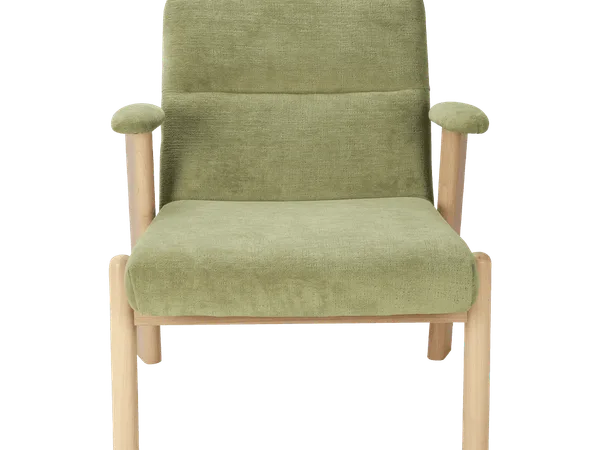
Wooden seats and wooden furniture are listed in Annex I, so a solid-wood dining chair is squarely in scope. There is a detail that matters specifically to us: rubber is itself one of the regulated commodities. Since a large share of our solid-wood line runs on rubberwood — timber from the rubber tree — that species sits under the wood rules either way, and the plantation story behind it has to be documented, not just told.
The timeline, as it stands
The application date was pushed back once, by a year. Where it landed: large and medium operators have been subject to the rules since 30 December 2025. Micro and small enterprises get until 30 June 2026. In practice that means that by mid-2026 essentially every wooden chair entering the EU, whoever imports it, needs the paperwork behind it. If you are reading this as an SME importer thinking you have time — the window is weeks, not years, and your upstream data collection takes longer than you expect.
Operator or trader: whose duty is which
The regulation splits the chain into two roles, and the duties are very different.
An operator is whoever first places the product on the EU market — for imported furniture, that is normally the importer of record. The operator carries the full due diligence duty: collect the information, assess the risk, mitigate it where needed, and submit the DDS with its reference number before the goods clear. That duty cannot be delegated to us, and we will not pretend otherwise.
A trader buys and sells the product after it is already on the EU market. Large traders carry near-operator duties — they must make sure a DDS exists upstream and pass the reference numbers along. Micro and small traders have a lighter load: keep records of who they bought from and who they sold to.
So when a distributor asks us to "send the EUDR certificate", the honest answer is that no such certificate exists. What exists is a data package from us, and a statement that their importer files.
What due diligence demands from the factory
The DDS has to identify, for every plot of land the timber was harvested from: geolocation coordinates, the country of production, the species by scientific name, and the quantity. That information does not live at the importer. It lives — or fails to live — at the sawmill and the plantation. This is where a furniture factory either supports your compliance or quietly breaks it.
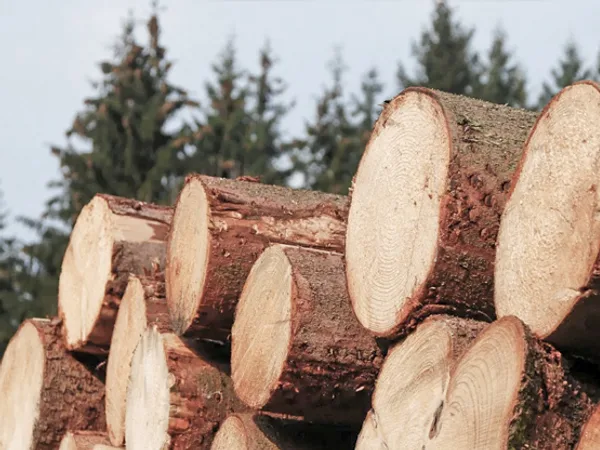
Rubberwood is, oddly, the easy case. It is plantation timber from mapped, registered estates with a defined replanting cycle, so the harvest plots are identifiable polygons rather than a vague forest region. Beech, oak and ash are harder: the upstream chain runs through log yards and mills, and the plot data has to be pulled through every link. We have been pushing our timber suppliers for plot-level data on exactly this basis — species, origin country, coordinates — so the package exists before a buyer asks, not three weeks after.
FSC helps. It is not a substitute.
A fair number of buyers believe an FSC chain-of-custody chain solves EUDR. It does not, and the regulation is explicit that certification schemes can inform the risk assessment but do not replace the operator's responsibility. What FSC CoC genuinely gives you is a traceability backbone — documented custody from forest to factory — which makes assembling the geolocation and legality evidence far faster. We covered how chain-of-custody actually works in our FSC note; read it as the foundation layer under EUDR, not as the answer to it.
Where a dual China + Vietnam base fits in
We produce in Anji, Zhejiang and in Binh Phuoc, Vietnam, and the EUDR data discipline has to be identical at both plants — the regulation does not care which of our gates the chair left, it cares where the tree stood. Running both bases means we already manage two separate timber supply chains with separate origin documentation, which is precisely the muscle EUDR exercises. The plot data, species declarations and supplier legality documents are assembled per plant and per program, and they travel with the order file. The wider sourcing logic of the two plants is in our dual-base note.
One honest caveat: we are a furniture factory, not a customs consultancy. We will hand your importer a complete, accurate data package and answer the upstream questions. Filing the DDS, classifying your role as operator or trader, and reading the country benchmarking for your risk assessment is work for your own compliance people.
What to ask any wood supplier now
Four questions sort the prepared from the improvising. Can you name the species, by scientific name, in every component of the chair? Can you produce harvest-plot geolocation for the timber in my order — and how long does that take? Which links sit between the forest and your saw shop? And what happens to my order if one timber source cannot produce the data — do you have a second source qualified?
If you are speccing a dining chair program for the EU and want to see what our data package looks like before you commit, send the request through our contact page. Build and test methods follow BIFMA and EN furniture standards, and third-party testing can be arranged per order.